
Paediatric Tooth Extraction
in Chandigarh
— Gentle, Pain-Free Baby Tooth Removal
5- 15 min
Always available
- ★★★★★ 5-star rated on Google
- Verified reviews on Google
- Read Reviews →
— What Every Parent Feels
No parent brings their child for a tooth removal lightly. Here is what child tooth removal Chandigarh families should know.
The word ‘extraction’ carries weight. It suggests something forceful and painful, something that will upset your child in a way that takes time to undo. But in the hands of a dentist who works with children every day, the baby tooth extraction Chandigarh parents dread is almost always far shorter and calmer than the waiting-room fear suggested. The tooth is loose, the root is partly resorbed, the anaesthetic is working, and the whole thing is over in minutes.
What makes the difference isn’t the extraction itself, it’s everything around it: how the anaesthetic is delivered, whether the child is prepared or surprised, whether the dentist narrates each step or works in silence, whether nitrous oxide is offered proactively or kept as a last resort.
At Tricity Smiles all of this is the standard approach, not an optional extra. Dr. Sandhu trained at USC and UCSF, where paediatric extractions follow a specific, child-centred technique: topical anaesthetic first, gentle vibration during the injection to mask discomfort, then a brief wait before an extraction most children describe as nothing more than pressure. Nitrous oxide is available at every appointment, and the space maintainer conversation happens at the same visit, so nothing is left unaddressed
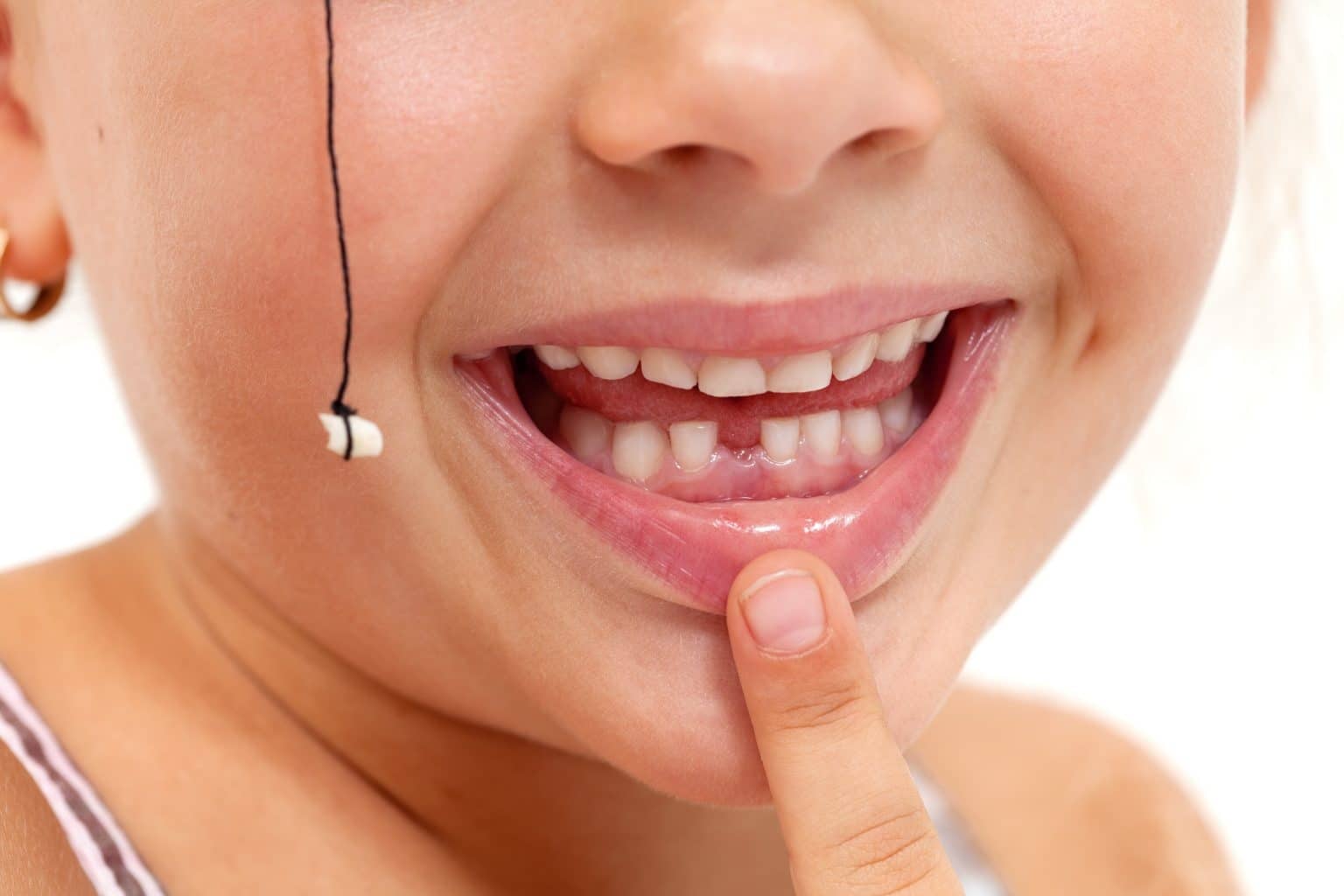
Extraction is always the last option. but sometimes it is clearly the right one
Decay beyond restoration
When a tooth has decayed to the point where insufficient tooth structure remains to support a filling or a crown — where the roots are involved, an abscess has formed, or pulpotomy has failed — extraction is the indicated treatment. Attempting to restore a tooth in this condition delays the inevitable and risks the abscess spreading to adjacent bone or the developing permanent tooth beneath. The extraction removes the source of infection cleanly, and healing begins the same day.
Abscess or acute infection
A dental abscess in a child is a clinical urgency. Infection spreads more rapidly in children than in adults, and an untreated abscess in a primary tooth can damage the developing permanent tooth bud directly beneath it. When swelling, facial involvement, or radiographic evidence of bone infection is present, extraction is performed as promptly as possible. Antibiotics may be prescribed alongside, but they address the systemic spread — the extraction removes the source. Same-day extraction appointments are available at Tricity Smiles for clinically urgent cases.
Wobbly tooth not falling out naturally
A wobbly tooth extraction kids Chandigarh parents sometimes need is when a primary tooth that should have fallen out months ago is still in place — and the permanent tooth has already begun erupting beside or behind it. When a loose baby tooth dentist Chandigarh assessment confirms the permanent tooth is actively erupting but blocked, extraction guides it into the correct position. For a very mobile tooth with minimal root remaining, this is often the quickest and least traumatic appointment in paediatric dentistry.
Orthodontic preparation
Occasionally, an extraction is part of an interceptive orthodontic assessment — when a crowded arch, an ectopically erupting permanent tooth, or a specific tooth that will not shed naturally in time warrants early removal. In these cases the extraction is planned, explained, and timed precisely. It is not an emergency — it is a considered clinical decision made as part of a longer-term plan for your child’s developing dentition. Premature tooth loss child Chandigarh planning always includes a space maintainer assessment at the same appointment.
When to extract — and when to try to save the tooth first
Try to save first
Restoration or pulpotomy first
If the decay is contained, the pulp can be treated, sufficient tooth structure remains for a crown , and the tooth has years of natural life before it would shed — a pulpotomy and stainless steel crown, or a GIC filling, is attempted first. An extracted tooth needs a space maintainer. A restored tooth holds its own space. Saving the tooth, when genuinely possible, is always the first preference.
Clear extraction criteria
Extraction is recommended when: decay has destroyed tooth structure beyond what a crown can protect; the pulp is irreversibly infected with abscess, sinus tract, or pathological root resorption; the tooth is over-retained and blocking the permanent successor; or the tooth is within months of natural shedding anyway and restoration is disproportionate to the benefit. In each case, the reasoning is explained clearly before the extraction proceeds.
Same visit — always
Space maintainer assessed immediately after
Every primary molar extraction at Tricity Smiles is followed immediately by the space maintainer assessment — X-ray to confirm successor root development, space analysis, and a clear recommendation before the child leaves the chair. If an appliance is indicated, it is fabricated chairside and placed at the same visit. The child leaves with both the problem resolved and the arch protected.
What to Expect
The extraction appointment — what actually happens, and why most children find it far easier than expected
The injection is what children anticipate most. At Tricity Smiles, it is the most carefully managed part of the appointment. Topical anaesthetic gel is applied and left for two minutes — the gum is genuinely numb before the needle makes contact. Then, as the injection is delivered, a vibration instrument is applied to the soft tissue near the site. Vibration disrupts the nerve signal that carries the sensation of the injection, masking it significantly. For any child who needs it, nitrous oxide is started before any of this begins.
Once the tooth is numb, the extraction is brief. Dr. Sandhu uses paediatric instruments appropriate for each tooth, applies controlled pressure to release the periodontal ligament, and the tooth comes free cleanly. The child feels firm pressure — not pain — and is told so in advance. Most children are surprised that it is over.
Before Anything Else — The Briefing
Topical Anaesthetic — Two Full Minutes
Vibration & Local Anaesthetic Injection
Extraction — Pressure, Not Pain
— Why Tricity Smiles
Painless tooth removal child Chandigarh — gentle technique, calm child, nothing left unaddressed
Vibration Technique During Injection
Nitrous Oxide at Every Appointment
Space Maintainer at the Same Visit

Dr. Sandhu
USC · UCSF · CMC Ludhiana
— Our Philosophy
What happens before the extraction is more important than the extraction itself.
Most of the anxiety a child brings into the dental chair on extraction day was not created at the dental clinic. It was created in the car on the way here. It was created at breakfast when a well-meaning parent tried to prepare their child with words that, however kindly intended, planted the wrong images. “It will hurt a bit, but don’t be scared.” “The injection is just a small needle.” “You didn’t brush your teeth when I told you — now Dr. will have to take it out.” “You need to learn your lesson.”
Every one of these sentences, spoken with the best of intentions, fills the gap in a child’s imagination with something worse than the reality. Hurt. Needle. Punishment. Lesson. By the time the child sits in the chair, they are not anxious about what is going to happen — they are anxious about what their mind has already decided is going to happen.
“We spend more time calming the child down than the procedure itself takes — and almost always, the anxiety came in through the front door with the parent.”
Many parents also carry their own childhood dental experiences into the room. A difficult extraction at age seven, a dentist who did not explain what was happening, pain that was not managed well. That memory is real — but it belongs to a different time, a different standard of care, and a different child. Projecting it onto your child is understandable, but it transfers fear rather than comfort.
At Tricity Smiles, we start every paediatric extraction appointment by speaking with the parent first. We give them specific words to use with their child instead of the ones that create fear. We say “sleepy juice” instead of injection. We say “the tooth is tired and ready to go” instead of extraction. We say “you’ll just feel the tooth being hugged” instead of pressure. And then we ask parents to be silent observers — to let us do the talking, sit back, and trust that the clinical conversation between dentist and child is the one that matters.
This is not a minor detail. It is the single biggest factor in how the appointment goes.
Words that create fear → Words that create calm
And one more thing — this appointment could have been avoided.
— FAQ
Kids tooth extraction Chandigarh — common questions
Does a baby tooth extraction hurt?
How much does a kids tooth extraction cost in Chandigarh?
How long does the appointment take?
When does a baby tooth actually need to be extracted?
What should my child eat and do after the extraction?
Does my child need a space maintainer after the extraction?
After the extraction
What to expect and how to help healing go smoothly.
- Bite gently on the gauze for 20–30 minutes. A small amount of blood-tinged saliva for the rest of the day is normal
- Numbness lasts 1–2 hours — do not let your child eat until it has fully gone; they may bite their lip without realising
- Soft cool foods only: yoghurt, mashed potato, dal, soft rice — nothing hot, hard, or sticky
- No straws, no forceful spitting, no rinsing for 24 hours — all can dislodge the blood clot
- After 24 hours: gentle warm salt water rinse after meals (half teaspoon salt in a glass of warm water)
- Brush teeth normally — avoid the extraction site gently for the first few days
- Mild soreness for 2–3 days is normal; children’s paracetamol at appropriate dose if needed
- Avoid hard or sticky foods until the socket has closed (5–7 days)
- Bleeding that does not slow after 30 minutes of firm gauze pressure
- Swelling that worsens after day 2 rather than improving
- Fever, increasing pain, or foul taste from the socket after day 3
Calm. Quick. And followed up properly.
Book your child’s extraction appointment with Dr. Sandhu. Gentle technique, nitrous oxide available, and space maintainer assessed at the same visit.
5★
Google Rating
5-star
rated on Google
20+
Years Experience