Missing teeth can affect much more than appearance. They can interfere with chewing, speech, bite balance, and may cause neighboring teeth to shift over time.
Dental bridges are a well-established, fixed solution used to replace one or more missing teeth and restore function and stability.
A missing tooth doesn’t just affect appearance: neighbouring teeth can drift, and chewing becomes uneven. A bridge is one of the most established ways to close the gap, and I’ll help you decide whether it or an implant suits you better.
Key takeaways
- A dental bridge is a fixed prosthesis that replaces one or more missing teeth by bridging the gap, supported by neighbouring teeth or implants.
- Types include traditional fixed bridges, Maryland (resin-bonded) bridges and implant-supported bridges.
- Compared with an implant, a bridge is quicker (about 2-3 weeks) and needs no surgery, but often requires preparing the adjacent teeth.
What Are Dental Bridges?
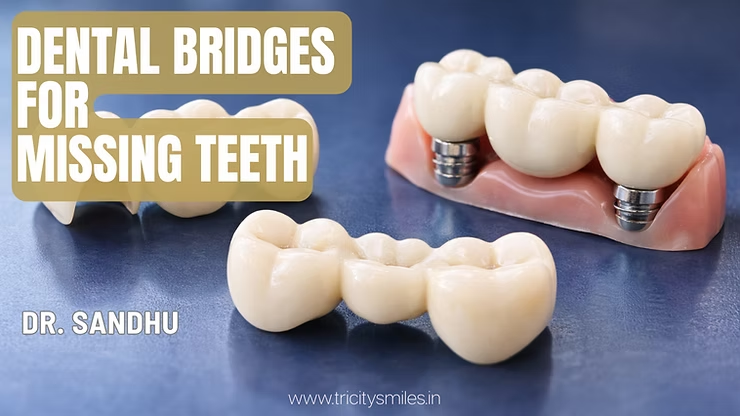
A dental bridge is a fixed dental prosthesis designed to replace one or more missing teeth by “bridging” the gap. It consists of:
- Abutments – natural teeth or crowns on either side of the missing space
- Pontic – the artificial tooth that replaces the missing tooth
Dental bridges help restore:
- Chewing efficiency
- Speech clarity
- Tooth alignment
- Facial support
- Smile aesthetics
Dental bridge vs dental implant
| Feature | Dental bridge | Dental implant |
|---|---|---|
| Support | Adjacent teeth or implants | Jawbone |
| Surgery required | No | Yes |
| Treatment time | Shorter (2-3 weeks) | Longer (3-6 months) |
| Effect on adjacent teeth | Often requires preparation | Preserves natural teeth |
✅ When Are Dental Bridges Used? (Indications)
Dental bridges are commonly recommended when:
- One or more teeth are missing in a row
- Adjacent teeth are healthy enough to support a bridge
- A fixed (non-removable) replacement is preferred
- Removable dentures are not desired
- Implant placement is not planned or needs to be deferred
🚫When Are Dental Bridges Not Used? (Contraindications)
Dental bridges may not be suitable when:
- Adjacent teeth are weak, mobile, or heavily decayed
- Gum disease is untreated or poorly controlled
- Very long spans of missing teeth lack adequate support
- Oral hygiene is poor
- Bite forces are excessive without protective measures
In such situations, alternative tooth-replacement options may be advised.
A patient’s experience
A patient who had lost a tooth after an accident told us he was self-conscious in meetings. He said the bridge was fitted in a matter of weeks, and he stopped thinking about the gap after the first day.
Types of Dental Bridges
1. Traditional Fixed Dental Bridge
- Supported by natural teeth on both sides of the gap
- Most commonly used type
- Requires preparation of adjacent teeth
2. Maryland (Resin-Bonded) Bridge
- Bonded to the back of adjacent teeth
- Used mainly for single missing front teeth
- Conservative option with minimal tooth preparation
3. Implant-Supported Bridge
- Supported by dental implants rather than natural teeth
- Used when multiple teeth are missing
- Provides strong, independent support
Materials Used for Dental Bridges
Dental bridges may be fabricated using:
- Zirconia – strong, metal-free, durable
- All-ceramic / porcelain – good aesthetics for visible areas
- Porcelain-fused-to-metal (PFM) – strength with moderate aesthetics
- Metal alloys – high durability for back teeth
Material selection depends on tooth location, bite force, and cosmetic requirements.
What Happens During the Dental Bridge Procedure?
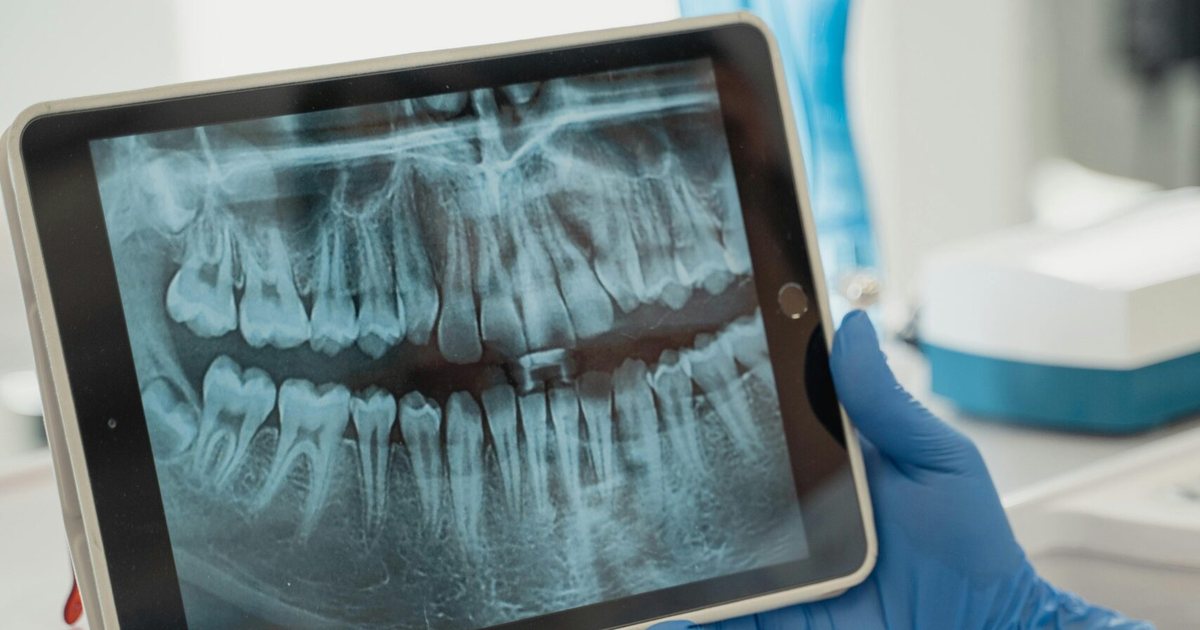
- Clinical Evaluation & Planning- Oral examination, digital X-rays or scans, bite assessment, and treatment planning.
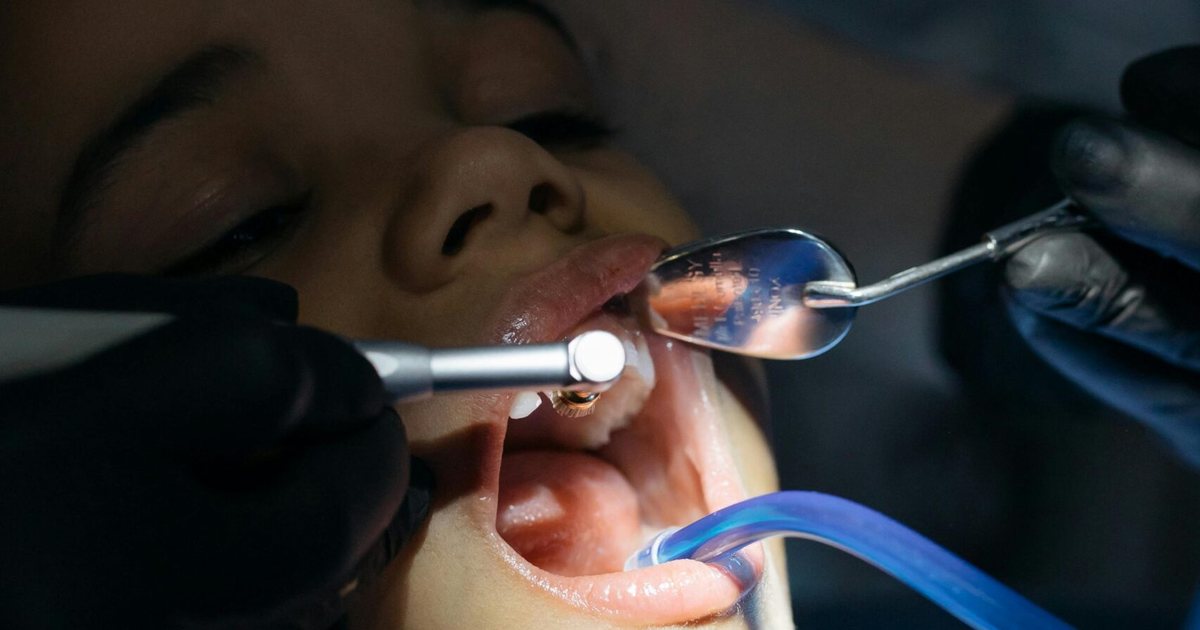
- Preparation of Supporting Teeth- Abutment teeth are conservatively shaped under local anesthesia.
- Digital Impression-A digital intraoral scan is taken for precision and patient comfort.
- Temporary Bridge Placement -Protects prepared teeth and maintains appearance and function.
- Final Bridge Placement- Fit, bite, and comfort are verified before permanent cementation.
Dental Bridge vs Dental Implant
| Feature | Dental Bridge | Dental Implant |
| Support | Adjacent teeth or implants | Jawbone |
| Surgery required | No | Yes |
| Treatment time | Shorter (2-3 weeks) | Longer (3-6 months) |
| Effect on adjacent teeth | Often requires preparation | Preserves natural teeth |
| Suitability | Limited span | Single or multiple teeth |
✔️ Dentists often recommend:
- Dental bridge – when adjacent teeth already need crowns or when a quicker fixed replacement is preferred
- Dental implant – when maximum longevity and bone preservation are desired
At Tricity Smiles Dentistry, we evaluate your bone levels, bite, age, gum health, and personal preferences to help determine the most suitable tooth-replacement option for long-term success.
Cost Factors for Dental Bridges
The cost of a dental bridge depends on:
- Number of missing teeth
- Type of bridge selected
- Material used
- Condition of supporting teeth
- Laboratory and digital technology
- Complexity of the case
A personalized consultation is essential for accurate treatment planning.
Related Services
- Dental Bridges
- Zirconia & Ceramic Crowns
- Root Canal Treatment
- Tooth-Colored Fillings
- Full-Mouth Rehabilitation
⭐What Our Patients Say
“My bridge feels stable and natural. I can chew comfortably again, and the entire procedure was explained clearly from start to finish.”- Mrs. Gurkirat
Questions about dental bridges? Talk to us before you decide.
Book a consultation at Tricity Smiles, Sector 28-A, Chandigarh, or message us on WhatsApp and we will get back to you.
Book NowWhatsApp UsFrequently asked questions
Are dental bridges removable?
No. Dental bridges are fixed restorations.
Do dental bridges damage adjacent teeth?
Supporting teeth are conservatively reshaped only when clinically required.
Can a bridge replace more than one tooth?
Yes, depending on the design and support available.
Is the procedure painful?
The procedure is usually painless under local anesthesia.
Sources and further reading
- American Dental Association (MouthHealthy): Bridges
- American Dental Association (MouthHealthy): Dentures
- NHS: Dentures
This article is general information for patients and does not replace a personal examination. Treatment plans and costs depend on your individual case.
About the author

Written by Dr. Sandhu
Founder and lead dentist, Tricity Smiles Dentistry, Chandigarh
Dr. Sandhu has over 20 years of clinical experience. He completed his BDS at CMC Ludhiana, holds a Master’s from the University of Southern California (USC) and completed the International DDS Program at UCSF. He is a member of Spear Education, the Dawson Academy and RIPE Global, and leads Tricity’s first 100% digital dental clinic, caring for families across Chandigarh, Mohali, Panchkula and Zirakpur.