
Restorative Dentistry
Composite Tooth Fillings
Fillings — Natural-Looking, Mercury-Free Restorations
Starting From
₹3,000+
Duration
30–60 min
Pain Level
Minimal
Filling cost depends on how many surfaces of the tooth are involved. A single-surface filling costs less than a three-surface filling on the same tooth. All costs are agreed before treatment begins.
- ★★★★★ 5-star rated on Google
- Verified reviews on Google
- Read Reviews →
— Understanding the Procedure
What is a tooth-coloured filling?
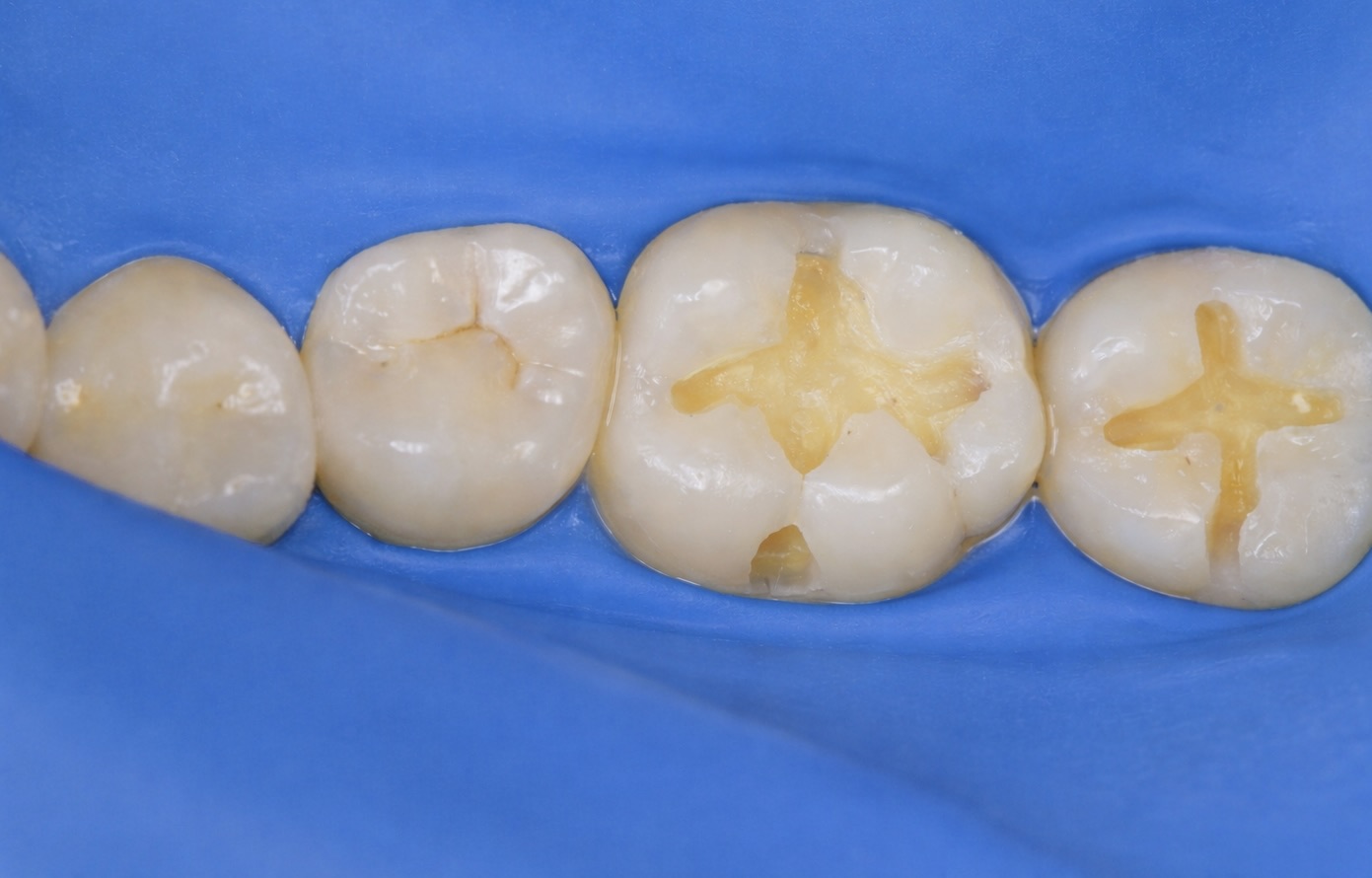
A dental filling restores a tooth that has been damaged by decay, removing the diseased portion and replacing it with a material that seals the tooth and restores its function. At Tricity Smiles in Chandigarh, we use only tooth-coloured materials — composite resin and glass ionomer cement (GIC) — both of which bond directly to the tooth structure and contain no mercury.
Unlike older silver amalgam fillings, which require the tooth to be shaped around the material, tooth-coloured fillings are bonded adhesively — meaning more of your natural tooth is preserved. Every filling at Tricity Smiles is documented with before and after photographs and radiographs so you can see precisely what has been done and why.
Not every cavity requires a filling immediately. Dr. Sandhu uses ICDAS (International Caries Detection and Assessment System) criteria to determine whether a cavity should be monitored, remineralised, or restored — ensuring you receive treatment only when it is clinically indicated.
Not all fillings are the same material
Not Offered
Amalgam (Silver)
Silver Amalgam
The traditional filling material used for decades. Durable, inexpensive, but visible, mercury-containing, and requires removal of more healthy tooth structure to place.
- Contains mercury — not used at Tricity Smiles
- Requires wider preparation of the tooth
- Dark grey in appearance — highly visible
- Expands and contracts with temperature
- Cannot bond to tooth — relies on mechanical retention
Offered
Glass Ionomer Cement
GIC (Glass Ionomer)
A tooth-coloured material that chemically bonds to tooth structure and releases fluoride, actively helping to protect surrounding enamel from further decay.
- Mercury-free and tooth-coloured
- Releases fluoride — protective against further decay
- Bonds chemically to tooth structure
- Best suited for cavities near the gumline, primary teeth, and difficult-to-dry areas
- Less wear-resistant than composite — not recommended for biting surfaces under heavy load
Gold Standard
Composite Resin
The current gold standard for tooth-coloured fillings. Strong, aesthetic, and bonded directly to the tooth with minimal removal of healthy structure.
- Mercury-free, natural tooth colour
- Bonds adhesively — preserves more tooth structure
- Strong enough for front and back teeth
- Polished to match the natural tooth surface
- Lasts 7–15 years with good home care
Not all decay needs a filling
We use ICDAS — the International Caries Detection and Assessment System — to determine the right treatment for each stage of tooth decay. This means fewer unnecessary fillings and more focus on prevention.
Monitor & Protect
Early decay confined to the enamel surface can often be arrested and reversed. No filling is placed. Fluoride, dietary advice, and improved oral hygiene are used to remineralise the affected area. Progress is monitored at every check-up.
Remineralise & Review
When decay has reached the outer dentine but the cavity is small, a decision is made based on the patient's caries risk, oral hygiene status, and rate of progression. Some teeth at this stage can still be managed without immediate restoration.
Restore
Once decay has cavitated into dentine and is progressing, a filling is required. The decayed tissue is removed, the tooth is assessed for pulp proximity, and the appropriate filling material is placed with precision.
— Understanding the Cost
Why does one filling cost more than another?
A common source of confusion is why two fillings on two different teeth — both described as simply a “filling” — can have different costs. The reason is surfaces.
A tooth has five surfaces: the biting surface (occlusal), the front face (mesial), the back face (distal), the outer cheek-facing side (buccal), and the inner tongue-facing side (lingual or palatal). Decay can involve one of these surfaces or several of them. A filling that covers three surfaces requires significantly more material, time, and technique than a single-surface restoration.
At Tricity Smiles, we show you your X-rays and photographs before treatment so you understand exactly which surfaces are involved and why the recommended filling is the size it is. Use the interactive guide on the right to see how surface involvement affects cost.
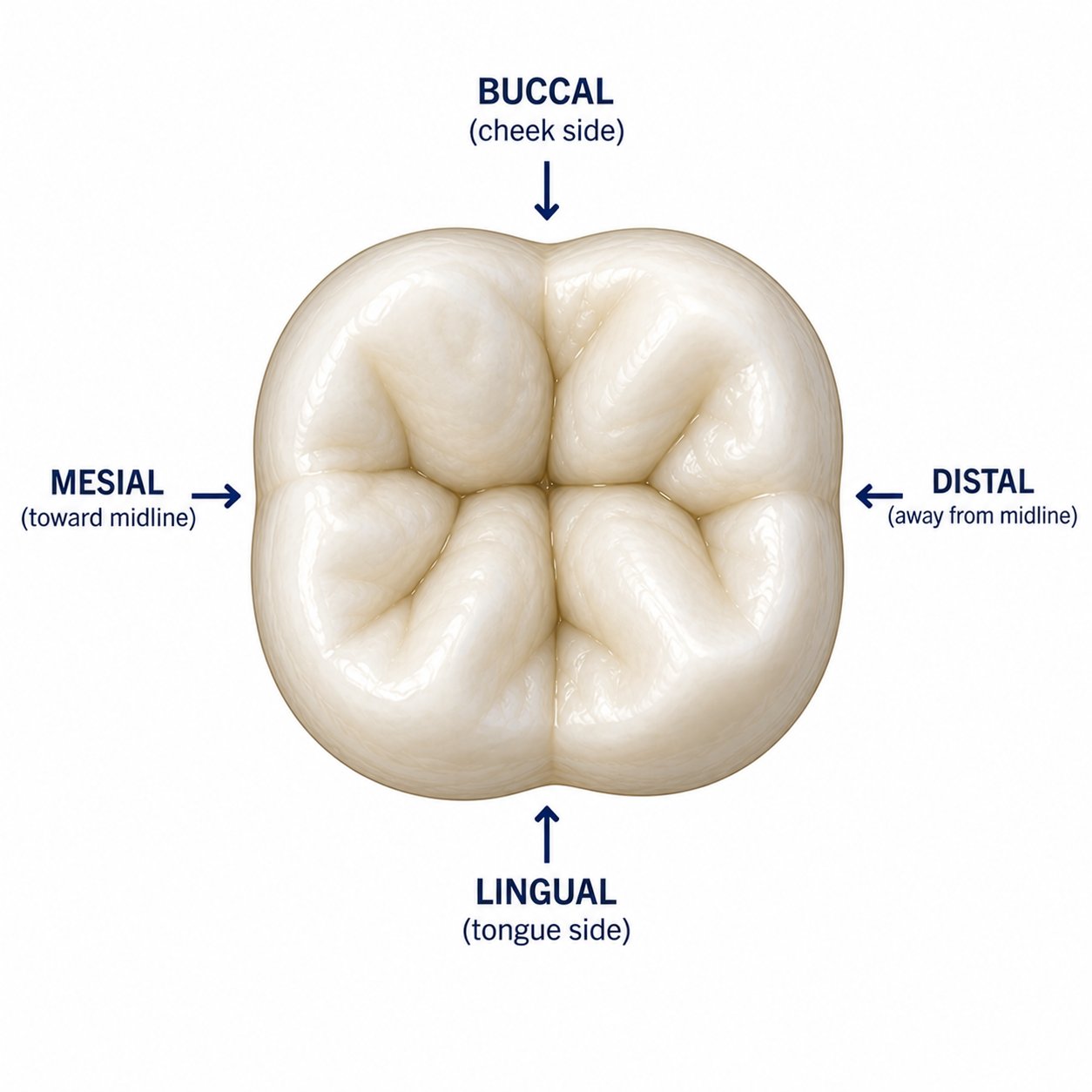
Occlusal (biting surface) is the base at ₹3,000. Each additional surface involved adds ₹1,000. Maximum for all 5 surfaces: ₹7,000.
This is an estimate only. Your exact cost is discussed and agreed before treatment. There are no hidden charges.
— Precision & Technique
When the filling is close to the nerve
Deep fillings — where decay has progressed close to the pulp (the nerve and blood supply of the tooth) — require a fundamentally different level of care. The margin for error is narrow. Heat, vibration, or the wrong material at this depth can irreversibly damage the pulp and turn what should have been a straightforward filling into a tooth that needs root canal treatment.
At Tricity Smiles, deep restorations are managed with a set of tools and materials that most clinics in Chandigarh simply do not use. This is not an upgrade or an add-on — it is the standard of care that every deep filling deserves.
High-Magnification Loupes
Electric Handpieces
Pulp-Protecting Materials
Before & After Documentation
— Why Tricity Smiles
Why your choice of dentist matters for a filling
US-Trained Restorative Expertise
ICDAS-Guided Treatment
Mercury-Free, Premium Materials
Full Documentation, Full Transparency

Dr. Sandhu
USC · UCSF · CMC Ludhiana
— Our Philosophy
Precision over price — why your filling
matters more than you think.
A dental filling is the most common procedure performed in dentistry. It is also one of the most variable. Two dentists can treat the same cavity on the same tooth and produce outcomes that are years apart in longevity — because the material used, the technique employed, the tools available, and the time taken all compound.
In Chandigarh, composite fillings are available at a wide range of price points. Some are performed quickly with composite materials that prioritise cost over quality, placed without adequate isolation, without magnification, and without checking pulp proximity on deep cavities. These fillings work. For a while.
“A filling done right is the most important thing — because it saves time, money, and expensive treatment down the road.”
A failed filling means a replaced filling. A replaced filling means a larger cavity to restore. A deep cavity restored incorrectly means a tooth that needs root canal treatment. A root canal tooth that then fractures means an extraction and an implant. Each step in this sequence multiplies the original cost of a properly placed filling many times over.
At Tricity Smiles, fillings are not a volume procedure. Every restoration is documented, every deep cavity is managed with the right materials and magnification, and every patient leaves knowing exactly what was done and why. We believe the right tools, the right materials, and the right time are not luxuries in restorative dentistry — they are the minimum standard.
Do not cheap out for dentists who do not use the right tools or sub-par filling materials. Your teeth are not a place to save money.
— FAQ
Filling FAQs
Common questions about composite fillings, tooth decay treatment, and what to expect in Chandigarh.
How much does a tooth filling cost in Chandigarh?
What is the difference between composite and GIC fillings?
Does every cavity need a filling?
Do you use amalgam (silver) fillings?
What happens if the decay is very deep?
How long do composite fillings last?
After your filling
- Avoid eating until the anaesthesia has fully worn off — usually 1–2 hours
- Your bite may feel slightly high immediately after — this settles as the anaesthesia wears off
- Avoid very hot or cold food and drinks for the rest of the day
First 24–48 Hours
- Brush normally — the filling is set immediately
- Avoid hard, crunchy foods on the filled tooth for 24 hours
- Avoid chewing on the filled side if the tooth still feels sensitive
- Mild sensitivity to hot, cold, and pressure for 1–4 weeks — especially with deep fillings
- Deep fillings may take longer to settle — this is normal as the pulp responds to treatment
Related reading: Dental fillings: types and cost · Stages of tooth decay
A filling done right protects your tooth for years.
Book your appointment with Dr. Sandhu. Precision restorations, premium materials, full documentation — and a filling that is built to last.
5★
Google Rating
5-star
rated on Google
20+
Years Experience